 Overview:
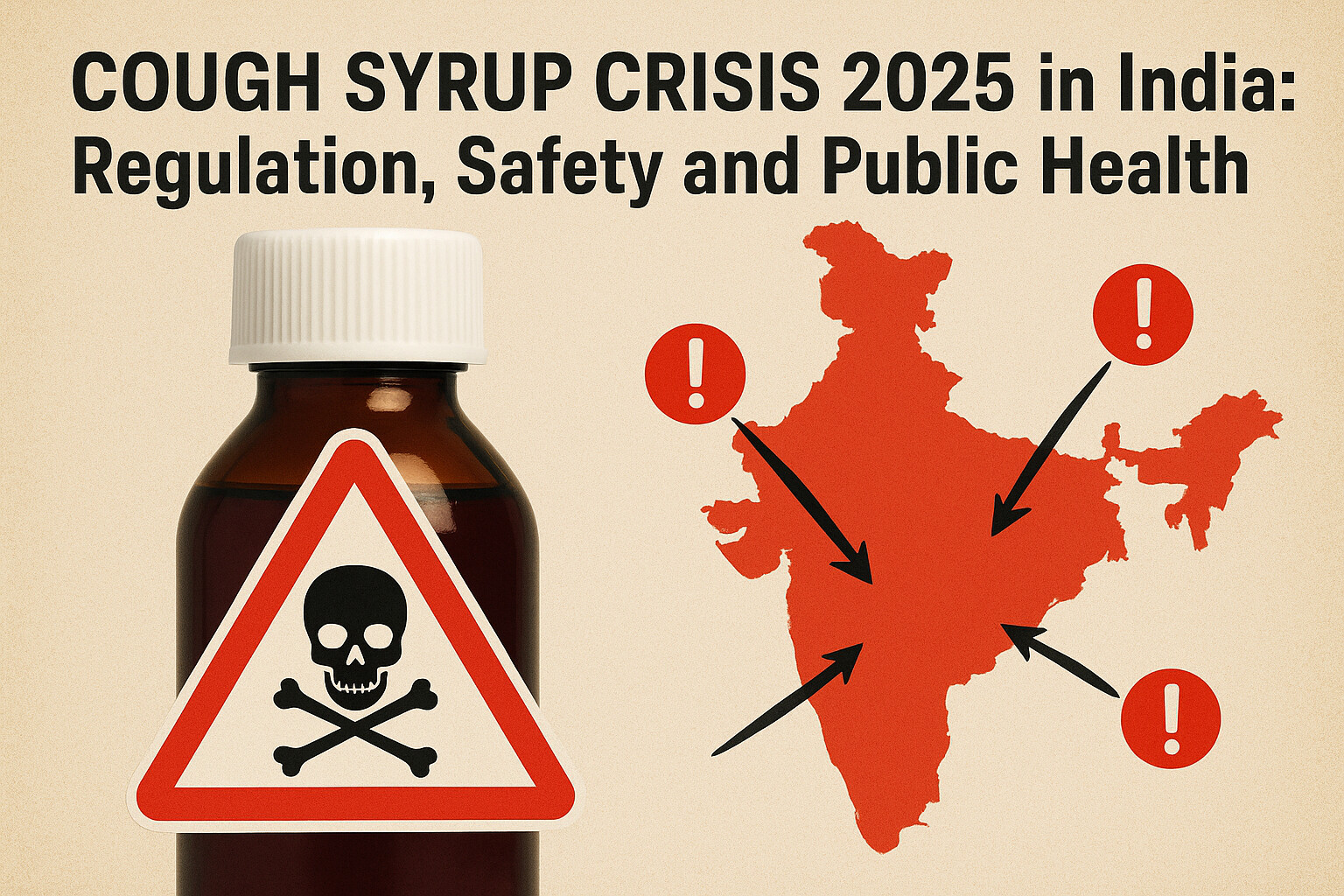
India — known as the “pharmacy of the world” — is facing renewed global scrutiny after multiple reports linked exported cough syrups to child deaths abroad. The 2025 Cough Syrup Crisis has pushed regulators, manufacturers, and policymakers to confront a critical question:
> Are India’s quality controls strong enough to protect global public health?
 The Trigger: Toxic Contaminants
Several countries, including Uzbekistan, The Gambia, and Indonesia, reported fatal poisoning cases in children traced back to contaminated Indian-made cough syrups.
Investigations by the WHO and national agencies revealed diethylene glycol (DEG) and ethylene glycol (EG) — toxic industrial solvents — in place of pharmaceutical-grade glycerin or propylene glycol.
These chemicals can cause:
Kidney failure
Neurological damage
Respiratory collapse
 Where the System Failed
The incidents exposed gaps in India’s drug regulatory ecosystem, including:
Lack of uniform testing standards across states.
Weak traceability of raw materials used by small-scale manufacturers.
Inadequate random testing of export batches.
Regulatory overlap between CDSCO (Central Drugs Standard Control Organization) and state authorities.
 Government & Industry Response
The CDSCO launched a national audit of pharma manufacturing facilities, suspending several licenses.
India rolled out mandatory testing certificates for exported cough syrups starting April 2024.
Pharma companies are now adopting API validation systems, barcode tracking, and digital quality-control logs to ensure transparency.
The WHO has partnered with India to enhance lab testing capacities and harmonise standards with global norms.
 Impact on India’s Pharma Image
The crisis shook confidence in India’s $50+ billion pharma export industry — particularly among African and Southeast Asian markets.
However, experts also note that India’s large generic drug base and swift corrective measures have prevented long-term damage.
This episode may ultimately strengthen India’s regulatory credibility if reforms are fully implemented.
 The Way Forward
1. Digital QC Systems – Integrating AI tools to detect anomalies in raw material data.
2. Centralised Drug Database – Linking state and national labs for transparent quality records.
3. Stringent Vendor Audits – Ensuring excipient suppliers meet global GMP standards.
4. Public Awareness – Educating pharmacists and patients about verified drug sources.
 > “This crisis is not just about one bad batch — it’s about rebuilding the world’s trust in Indian pharmaceuticals,” says Dr. P.K. Singh, pharma regulatory expert.
“Transparency, traceability, and training are the three pillars we must strengthen immediately.”
MBH/PS