Xenotransplantation refers to the process of grafting or transplanting organs or tissues between members of different species.
To address the ongoing shortage of organs available for replacement, xenotransplantation of hearts, corneas, skin, and kidneys has been attempted.
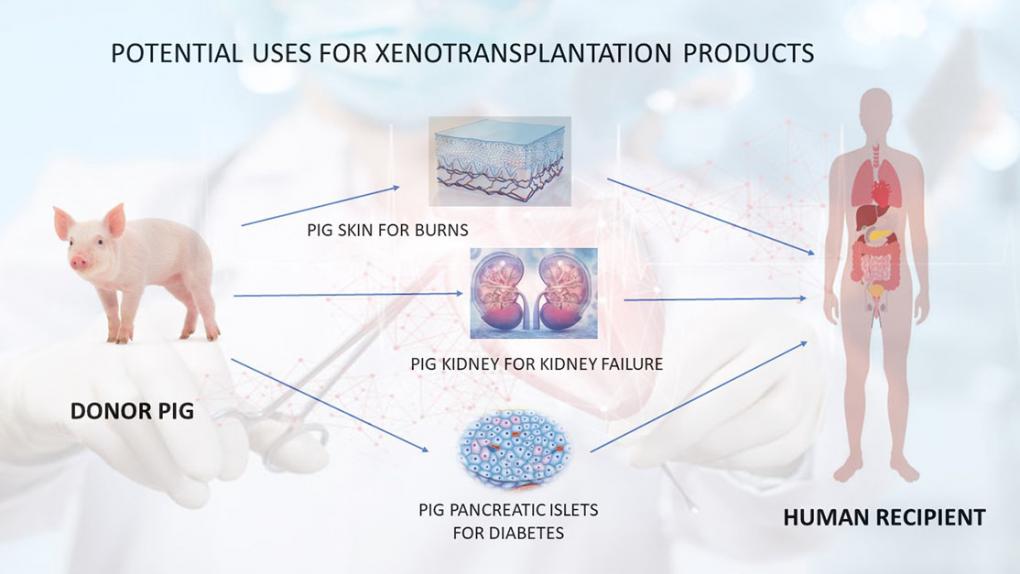
Pigs are the species of choice to harvest organs for xenotransplantation.
Why Pigs Are the Preferred Donors
While monkeys and baboons are genetically closer to humans, ethical and ecological concerns make them unsuitable as organ donors. Pigs, on the other hand, are ideal because:
- Their organs are physiologically similar to humans
- Organ size is comparable to human organs
- They can be raised in controlled environments
- Most importantly, they can be genetically modified to reduce rejection
Advantages
- Unlimited Organ Supply: No more waiting lists or scarcity crises.
- Elective Availability: Transplants could be scheduled instead of relying on emergency donations.
- Expanded Candidate Pool: More patients could become eligible for transplants.
- Avoidance of Brain-Death Damage: Unlike human donor organs, pig organs aren’t affected by complications of brain death.
Risks
- Rejection: The immune system may attack the organ through hyperacute, acute, or chronic vascular rejection.
- Zoonoses: Risk of transmitting infections from animals to humans.
- Long-Term Functionality: Ensuring that animal organs can sustain human life for years.
What do you think—would you support pig organ transplants if it could save a life?
MBH/PS