Period Poverty in Plain Sight: Why Access to Sanitary Products Is a Health Right—Not a Privilege

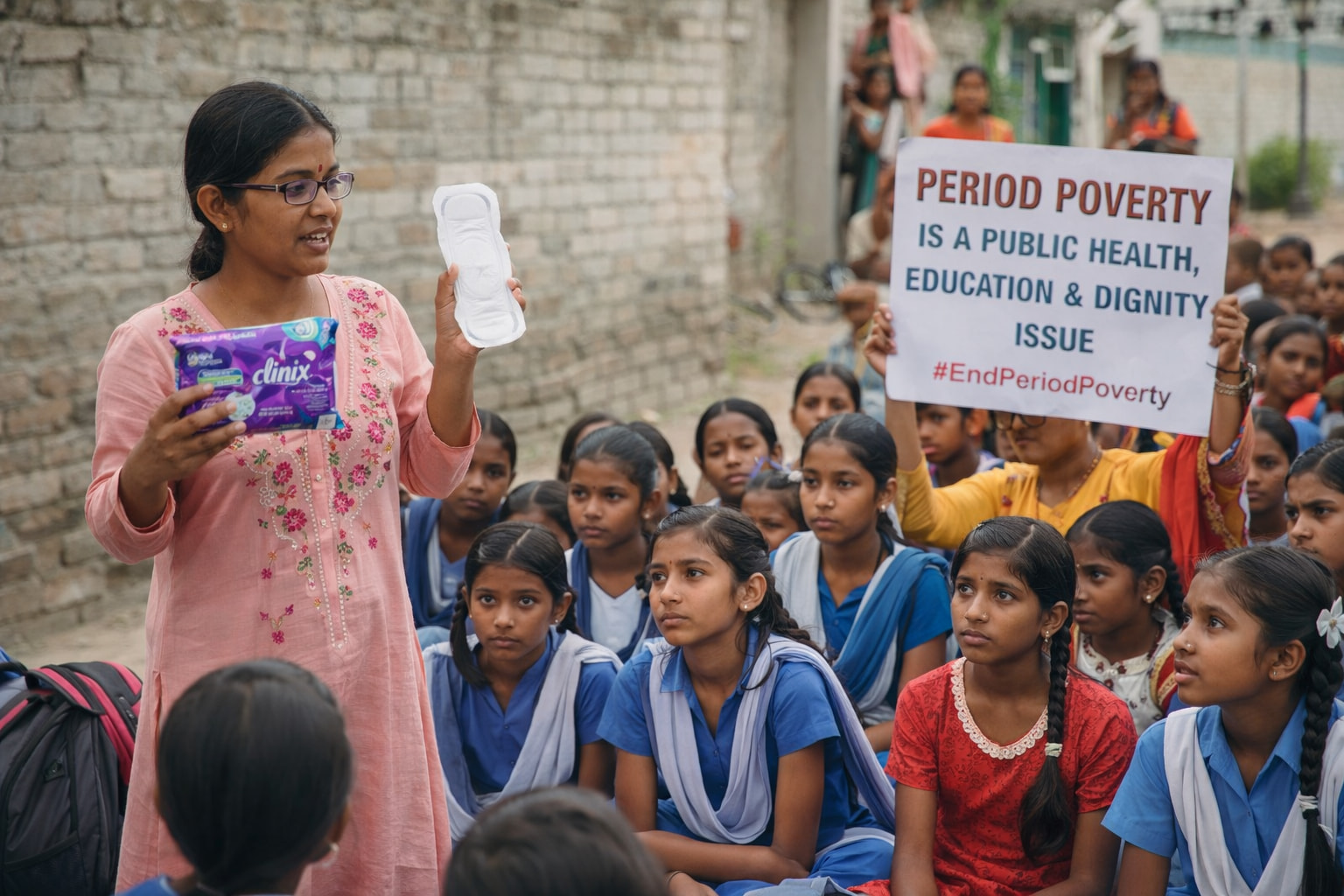
Menstruation is a biological reality, yet for millions, managing it safely is still a daily struggle. Period poverty—the lack of access to affordable sanitary products, education, and sanitation—is not just a menstrual issue. It is a public health, education, and dignity crisis that continues to shape lives quietly and unequally.

While free sanitary pad schemes exist, the real question remains: are they enough?


Period Poverty: More Than Just Pads

Period poverty goes beyond not being able to afford sanitary products. It includes:

  • Lack of menstrual health education

  • Inadequate water and sanitation facilities

  • Social stigma and silence

  • Limited choice of safe menstrual products

Together, these factors create long-term health and social consequences.


Real-Life Impact on Education

In many parts of India and other low- and middle-income countries:

  • Girls miss school during menstruation due to fear of leaks, pain, or lack of toilets

  • Some drop out entirely after menarche

  • Concentration and participation suffer even when attendance continues

Studies and field reports repeatedly show that menstrual insecurity directly affects educational continuity, especially during adolescence.

Health Consequences That Go Unseen

When sanitary products are inaccessible, people may resort to:

  • Reusing cloth without proper drying

  • Unsafe absorbent materials

  • Prolonged use of single pads

These practices increase the risk of:

  • Reproductive tract infections

  • Skin irritation and rashes

  • Delayed care for menstrual disorders

Poor menstrual hygiene is not a personal failure—it’s a systemic one.


Are Free Sanitary Pad Schemes Enough?

Government and NGO-led free pad distribution programs have helped:

  • Normalize conversations around menstruation

  • Improve initial access

  • Increase school attendance in some regions

But gaps remain:

  • Inconsistent supply

  • Lack of choice or quality

  • Poor disposal infrastructure

  • Minimal follow-up education

Pads alone cannot solve period poverty without sustained education, infrastructure, and autonomy.


Menstrual Equity Is a Health Right

Access to menstrual products should be treated like access to:

  • Clean water

  • Toilets

  • Basic healthcare

When menstruation is managed safely, individuals can study, work, and live without interruption or shame.

Menstrual equity is not charity—it’s health justice.


What Actually Creates Lasting Change

  • Comprehensive menstrual education from early adolescence

  • Reliable access to affordable products

  • Clean, private sanitation facilities

  • Community-led stigma reduction

  • Inclusion of menstrual health in public health policy

When systems change, individual outcomes follow.


Final Thought

Period poverty persists not because solutions don’t exist—but because menstruation is still treated as a side issue rather than a public health priority. Free pad schemes are a start, not the finish line.

True progress begins when menstrual health is recognized as a right, not a privilege.


Do you think improving menstrual education and sanitation infrastructure would have a greater long-term impact than free pad distribution alone? Why or why not?

Share your opinion in the comments.

MBH/PS

20 Likes

Period Poverty Discussion Response:

Period poverty is indeed a critical yet overlooked public health crisis that affects millions across the globe. Beyond mere affordability of sanitary products, it intersects with educational access, workplace dignity, and basic human rights. Lack of menstrual health education perpetuates stigma and misinformation, while inadequate sanitation facilities in schools and workplaces are forcing many to miss opportunities.

But while free sanitary pad schemes are a good thing, comprehensive solutions need to point towards the broader ecosystem, including menstrual health literacy, breaking cultural taboos, ensuring clean private facilities, and making conversations about menstruation commonplace. This will involve multi-sectoral collaboration among healthcare, education, and policymakers if period poverty is truly to be transformed from a private struggle into a recognized public health priority that deserves systemic intervention and adequate

1 Like

Yes, Improving menstrual education would have a great long term impact than free pad distrubution. Periods are not only about pads but also hygiene. Lack of hygiene is an invitation to other diseases.

1 Like

Period poverty affects health, education, and dignity. Free pads help, but lasting change needs broader access, education, and sanitation.

1 Like

Definitely! Menstrual education and sanitary infrastructure is very much important to overcome this issue. The major reason for period poverty is lack of awareness,social stigma and lack of hygiene awareness around it especially in countries like ours. For overcoming any issue we need to get to the root of it. So yes,menstrual education and sanitary infrastructure matters.

1 Like

My sincere congrats to the author for tackling such a pertinent societal topic, particularly for Indian young girls. Period povery is a major public health and dignity issue that goes beyond simple cleanliness.

Financial constraints, a lack of understanding, and inadequate distribution networks continue to deny many girls access to saniatry goods. According to research, a sizeable portion either cannot afford sanitary items or turn to risky subsitutes, which has an impact on confidence, education, and health.

To guarantee that these necessities reach every location, the Union Government and State authorities must fortify supply chains, infrastructure,and awareness campaigns. Menstrual health ought to be regarded as a basic entititlement rather than a luxury. The budget must include enought money for the finance minister to deal with this immediately.

1 Like

Every woman should have awareness about hygiene during her menstrual days. The use of sanitary pads, wearing clean and good-quality undergarments, and ensuring adequate rest during periods are important topics for creating awareness among women.

1 Like

Yes well explained, by implementing some plans to provide menstrual education will reduce period poverty.

  • By educating people about menstruation is a natural phenomenon in females and to reduce social stigma in the areas where people are less aware.
  • By creating awareness to men to respect women and support them everywhere like in academic and working places.
  • By bringing more safer and economical sanitary products to all the people even who are from Poverty areas.
  • By providing minimum necessities like clean washrooms, water and sanitary products available in public and private places of all the areas particularly in developing countries.
1 Like

A very important and well-articulated piece. Period poverty is not just about lack of sanitary products, but also about education, hygiene facilities, and breaking social stigma. Ensuring menstrual health access is truly a matter of dignity, equality, and basic healthcare rights.

1 Like

Yes, I believe infrastructure and education have a more profound long-term impact than distribution alone. A pad is only effective if a girl has a private stall to change it in, clean water to wash her hands, and the knowledge to understand that her body isn’t ‘broken’ or ‘impure.’ Without the infrastructure (dignified disposal and private toilets) and the education (to dismantle the social stigma), the cycle of period poverty continues the moment the free supply runs out.

True menstrual equity isn’t just about giving someone a product; it’s about ensuring they have the autonomy and environment to use it with dignity. Thank you for highlighting that this is a public health crisis, not a personal one."

1 Like

Investing in education and sanitation addresses health, gender equity, and social inclusion together.

1 Like

This is an important issue where I think both education and free pad distribution are essential. Moreover the high tax which is imposed on sanitary pads should also be free…

1 Like

Free pad distribution is a good initiative but is definitely not enough to create menstrual awareness and prevent menstruation related diseases. I think the major obstacle in this case is the social stigma associated with it. When the society will start understanding and accepting menstruation as a normal part of every woman’s life, only then we will be able to address and prevent numerous menstruation related gynecological issues.

1 Like

Yes. Improving menstrual education and sanitation infrastructure addresses the root causes of lack of knowledge and inadequate facilities, empowering girls to manage periods safely and confidently long-term.

Free pad distribution helps temporarily, but without education and proper facilities, its impact is limited and unsustainable.

Menstrual education plays a vital role in every girl’s life.Proper menstrual education and sanitation can improve their health issues by reducing infections and other diseases.

1 Like

yes, i think menstrual education and sanitary infrastructure would have a greater long-term impact than a free pad distribution alone.

In order to reduce period poverty Education plays a important role as it changes behaviour and normalise the period-talk amongst them.

1 Like

Period poverty isn’t just about money; it’s about the stigma that keeps people in the

School Dropouts: Globally, 1 in 10 girls in Africa misses school during their period, eventually leading to higher dropout rates.The Shame Factor: Cultural taboos often frame menstruation as “dirty” or “impure,” leading to social isolation.

Lack of Education: Many young people experience their first period without knowing what it is, leading to unnecessary fear and trauma.Gender Inequality: Period poverty disproportionately holds back women, girls, and trans/non-binary individuals from achieving their full potential.

1 Like

Yes free pad distribution alone is not going to resolve the problems. Menstrual education, access to clean water and toilets are also equally important.

1 Like

Yes thank you for such insights. Topics like menstrual health and sanitation really require the attention of people. Every person must be aware of such topics, not only girls or women.
As already mentioned in the post, only giving free pads to girls is not the complete solution. This is done by many NGOs and government authorities, but in reality it alone is not enough.
The actual meaning of period poverty is not just unavailability of menstrual or sanitary products. It also includes lack of awareness about menstruation, lack of proper knowledge, not having sanitary infrastructure for disposal, and most importantly the stigma around menstruation, including practices like untouchability.
Resolving these issues through education from adolescence, creating awareness, and ensuring private and clean sanitary facilities and proper disposal methods can have more long-term impact than only distributing free sanitary products.

2 Likes

Yes, improving menstrual education and sanitation infrastructure would have a much greater long-term impact than free pad distribution alone. Free pads are important and helpful, especially in the short term, but they mostly address immediate access. Without proper education, many people still carry myths, shame, or confusion around menstruation, which affects how products are used and whether girls feel confident attending school or work during their periods. Education normalizes menstruation, builds body awareness, and empowers girls to make informed choices, so the benefits continue long after any single program ends.

Sanitation infrastructure is the other missing piece that often gets overlooked. Pads don’t help much if there’s no clean toilet, water to wash, or a safe place to change and dispose of them. When schools and public spaces have proper facilities, menstrual hygiene becomes a normal part of daily life instead of a monthly obstacle. Together, education and infrastructure create lasting behavior and cultural change.

2 Likes

Yes, improving education among young adolescence can make a long term impact, every people can understand it a normal thing that happening in the body and normalize the conversation about menstruation in public.

2 Likes