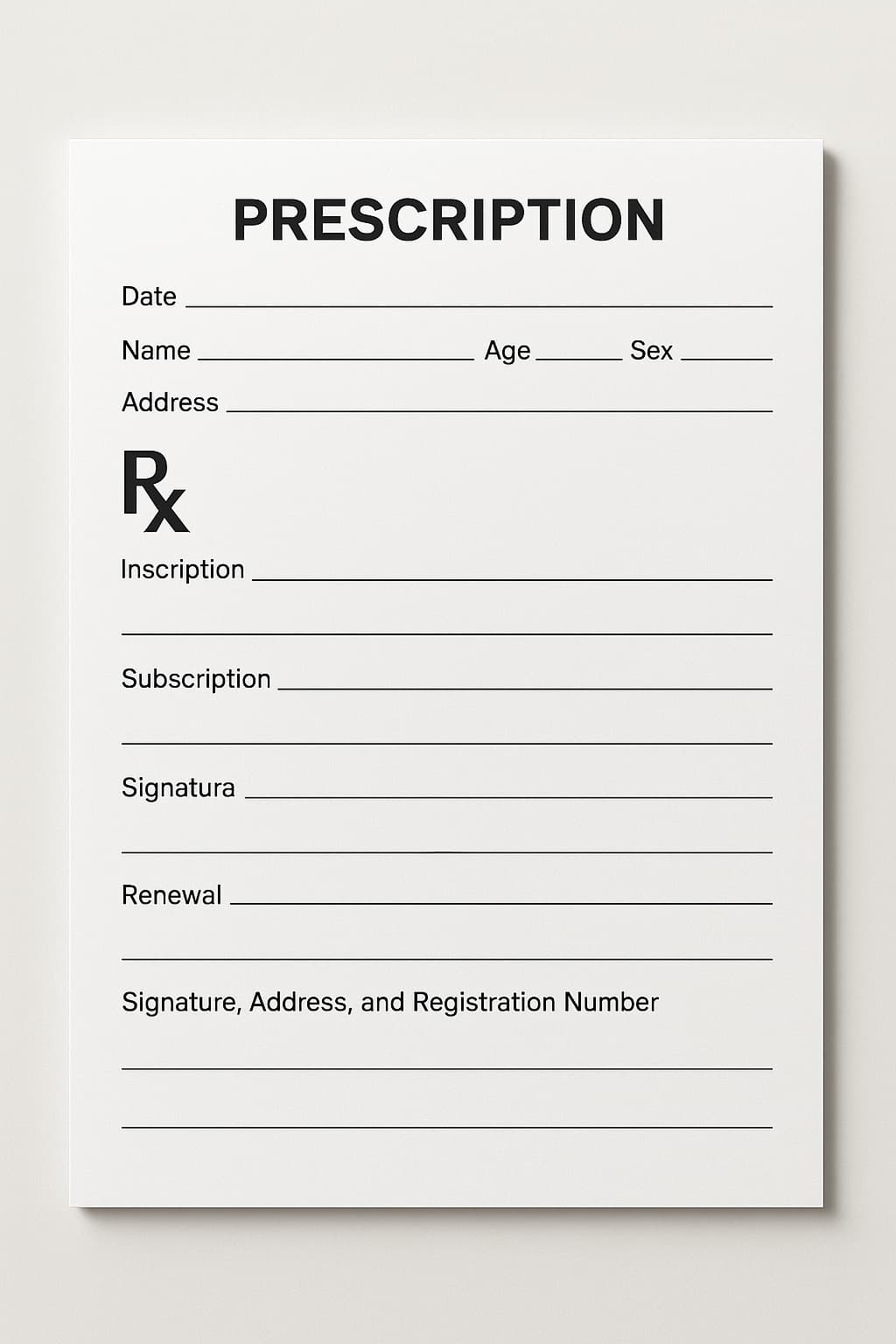
Prescriptions are generally written on a typical format which are usually kept as pads. A typical prescription consists of following parts:
- Date
- Name, age, sex and address of the patient.
- Superscription.
- Inscription.
- Subscription.
- Signatura.
- Renewal
- Signature, address, and registration number of the prescriber.
Date: It helps pharmacist to find out the date of prescribing and date of presentation for filling the prescription.
Name, age, sex and address of the patient : all these details should be written in the prescription for the patient identification.
Superscription : It is represented by a symbol Rx which is written before writing the prescription.
Inscription : This is the main part of the prescription order contains the names and quantities of the prescribed ingredients.
Subscription : This comprises direction to the pharmacist for preparing the prescription and number of doses to be dispensed.
Signatura : This consists of direction to be given to the patient regarding the administration of the drug.
Renewal : The prescriber indicate on every prescription order whether it may be renewed and if so how many times. it is very important particularly in the prescription containing the narcotic and other habit forming drugs to prevent its misuse.
Signature, address, and registration number of the prescriber : The prescription must bear the signature of the prescriber along with its registration number and address. It is very important particularly in the prescription containing the narcotic and other habit forming drugs, to prevent its misuse.
MBH/AB
5 Likes
Intresting but we all learnt this in our first year of studies.
1 Like
Yes we pharmacists only know about this but others dont know so I have created this topic.
Studied in first year pharmaceutics , recalled it again thanks for sharing
1 Like
This format has to befollowed very strictly, not everyone does.
1 Like
Informative, A prescription isn’t just a doctor’s note—it’s like a roadmap for your medicine. It has the date, your details, the Rx symbol, the list of medicines and their amounts, instructions for the pharmacist, and directions for you on how to take them. It also mentions if the medicine can be renewed and has the doctor’s signature and registration number, which is super important, especially for strong or habit-forming drugs. Knowing this helps us take medicine safely and avoid mistakes.
1 Like
This was the first chapter on Pharmaceutics subject. Thanks for letting me recall it.
1 Like
I can recall this topic called parts of prescription when we were in our 1st year 1st semester though it sounds easy, but many pharma students can relate like they legit gets confused between superscription, inscription and subscription when they give in any MCQ’s.
1 Like
informative useful for new people
1 Like
Prescription format is very important in pharmacy practice. Each part—from date to prescriber’s signature—has a clear role in safe drug delivery. I liked how the post explained terms like superscription and signatura in simple words. It also shows how prescriptions help avoid misuse, especially with habit-forming drugs. As a pharmacy graduate, learning this structure helps us stay professional and accurate. It’s a basic but powerful tool in patient care.
1 Like
Important information. Thanks for sharing this information.
1 Like