Future of Healthcare is here: AI doctor’s treating thousands daily!
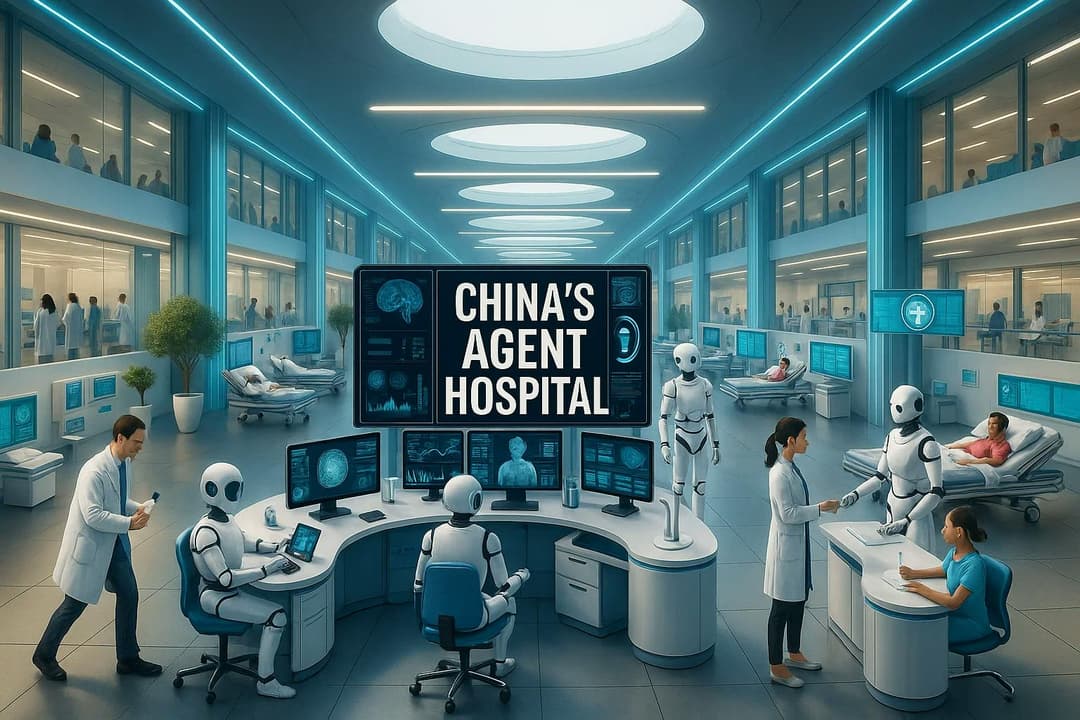
•China has launched the world’s first AI powered hospital, staffed with robot doctors without human intervention. This virtual facility, developed by researchers at Tsinghua University, uses large language models (LLMs) to operate 42 AI doctors across 21 medical departments.
•These AI doctors can perform tasks like diagnosis, treatment planning, and even generate prescriptions, potentially handling upto 10,000 consultations per day.
•The AI hospital is not just a technology feat but also a potential blueprint for the future of healthcare- millions could benefit from this.
yes i prefer the treatment from robot doctors and as well as with the doctor support. Yes defintely our country India will also be able to build AI hospital in the future.
I don’t think so I’ll go the hospital run by AI , it’s my personal choice and have no offece against AI but who will take the responsibility, if something new occurred which is not taught to AI ( end to end it’s machine learning tech )
Yes i will prefer treatment from robot doctors for basic consultations with the proper guidance with the professional doctor.Yes India will able to build AI hospital in future .
I believe that most people in India may initially be hesitant to seek treatment at an AI-driven hospital. Trust in such technology is likely to grow only after they witness others benefiting from it.
Treatment from robot doctors can be highly efficient, especially for tasks like diagnosis, surgery, and data analysis, as they can reduce human error and operate 24/7. However, human doctors are still essential for empathy, complex decision-making, and ethical judgment. As for India, with its strong IT sector and growing investment in AI, it is very likely that AI-powered hospitals could emerge in the future. These hospitals may use AI for diagnostics, patient monitoring, and robotic surgery, improving access to quality healthcare, especially in remote areas.
Yes, it’s a fascinating advancement! AI can surely reduce patient load, improve access, and bring uniformity in care. But I think human touch is still important, especially for emotional support, complex cases, and ethical decisions.
India has the talent, the tech ecosystem, and the medical need so yes, it’s possible. But the rollout would demand strict regulation, ethical oversight, language adaptability, and integration with human expertise.Because while AI can diagnose a disease, only human doctors can offer empathy, context, and ethical judgment.
Considering the potential advancements in artificial intelligence, a pertinent question arises regarding the future prospects of individuals who have dedicated significant time to obtaining a medical degree.
I don’t think AI hospitals are good. Healthcare need humans and emotions, not just robots. Let AI make the monotonous task easier but it should never replcae healthcare workers.
That’s truly mind-blowing! AI doctors treating thousands daily could help solve the shortage of healthcare workers. I’d be open to using AI for basic consultations or follow-ups, but for serious cases, I’d still want a human doctor involved. As for India yes, with the right investment in tech and training, building AI hospitals here is very possible in the near future.
AI hospitals are an exciting step forward for accessible and efficient healthcare, especially in overburdened systems. While I’d trust AI for basic consultations, human oversight is still essential. With the right investment and regulation, India could definitely build its own AI-powered hospitals in the future.
AI hospitals are revolutionizing healthcare by offering fast, scalable, and cost-effective care. While robot doctors can boost access and efficiency, I will still prefer the human touch for empathy and trust.
“Agent Hospital” stands as a powerful testament to the potential of AI-driven solutions. This cutting-edge initiative integrates advanced AI technologies into hospital management, diagnostics, and treatment, setting a benchmark for efficiency and precision. For senior healthcare executives, understanding the implications of such innovation is critical to staying ahead in an increasingly competitive landscape.